In-Depth Appraisals of the Englishmen Who Shaped Modern Motoring
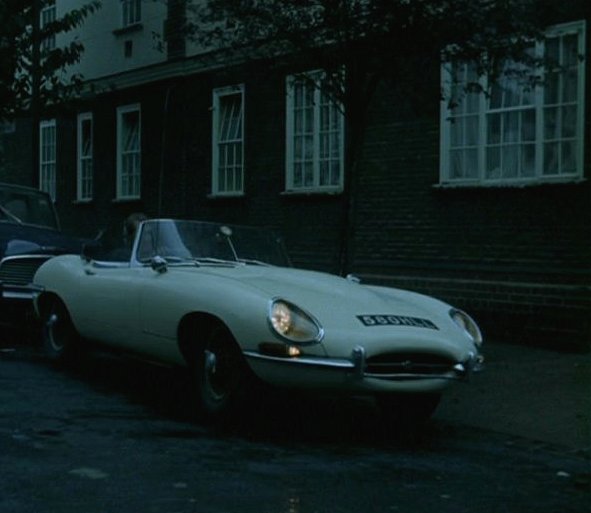
Pictured is the 1961 Jaguar E-Type Open Two Seater Series I, featured in episode 26 of the spy/action-adventure series The Champions (1968), designed by Malcolm Sayer. The theme tune for The Champions was created by English composer and musician Tony Hatch, who created many beloved British soap and drama themes during his career. He also co-wrote the theme for the popular Australian soap Neighbours, with lyrics by his then-wife, Jackie Trent.
The 39 Steps (39 English engineers - a play on the film by renowned English director Alfred Hitchcock ;)
Colin Chapman stands as one of the most influential engineers in the history of motorsport, renowned for his uncompromising philosophy of “simplify, then add lightness.” As the founder and guiding force behind Lotus, Chapman rejected brute-force engineering in favor of intelligent structural efficiency, reshaping how performance cars were conceived and built. His introduction of the monocoque chassis with the Lotus 25 redefined Formula One safety and stiffness, while the Lotus 49’s use of the engine as a stressed structural member fundamentally altered race car architecture. Chapman’s later pioneering work in ground-effect aerodynamics further transformed the visual and technical language of racing, enabling unprecedented cornering speeds and permanently shifting the competitive landscape. His legacy lies in proving that elegance, efficiency, and radical thinking could outperform sheer power—principles that continue to underpin both motorsport engineering and high-performance road car design.
Keith Duckworth was a visionary engineer celebrated for his uncompromising focus on mechanical efficiency and his mastery of gas-flow dynamics. As the engineering mind behind Cosworth, he revolutionized motorsport with the creation of the Ford Cosworth DFV V8, an engine featuring four-valve-per-cylinder heads and a carefully optimized valve layout that maximized combustion efficiency for its era. The DFV (Double Four Valve) engine went on to become the most successful in Formula 1 history, securing 155 race wins and powering legendary drivers to multiple world championships. Duckworth’s ingenuity extended beyond thermodynamics; he designed the DFV to function as a stressed member of the chassis, allowing the engine to bear the structural loads of the rear suspension. This radical integration, first realized in the Lotus 49, eliminated the need for a heavy rear subframe and set the architectural standard for every F1 car that followed. His legacy lies in proving that an elegant, high-performance engine could also serve as a transformative structural component, demonstrating that the most effective engineering solutions often fulfill multiple purposes simultaneously.
James Lansdowne Norton was a seminal figure in the early history of English motorcycling, whose vision and engineering acumen laid the foundation for one of the nation’s most iconic marques. In 1898, he established Norton Motorcycles, bringing together technical skill and a relentless pursuit of mechanical reliability at a time when motorized transport was still in its infancy. Known affectionately as "Pa," Norton personally developed the company’s early engines, emphasizing a long-stroke design philosophy that provided the immense torque and durability required for the grueling road conditions of the era. His technical foresight was validated at the inaugural Isle of Man TT in 1907, where a Norton motorcycle won the twin-cylinder class, cementing the brand’s reputation for speed and dependability. While later models like the legendary Norton Manx would define the company’s racing legacy through the "featherbed" frame and double-overhead-cam engines, these came decades after Norton’s death in 1925; his enduring impact was structural and foundational. By creating rigorous engineering standards and a culture of "competitive testing," Norton ensured that his company could sustain excellence. His legacy is thus less about individual racing triumphs and more about the durable framework he established, which enabled Norton to become a cornerstone of English motorcycle engineering and a global benchmark for performance and reliability for generations to come.
Malcolm Sayer trained as an aircraft engineer at the Bristol Aeroplane Company, bringing a wartime analytical discipline to Jaguar at a time when automotive styling was still dominated by intuition and artistic sketching. Rather than relying on subjective aesthetics, he employed seven-figure logarithmic tables and precise coordinate plotting—effectively performing manual CAD decades before such software existed—to generate body shapes that minimized drag while achieving a rare sense of visual purity and balance. This approach reached its most enduring expression in the Jaguar D-Type, where Sayer adapted aviation-inspired vertical stabilizers, most famously the tail fin, to provide directional stability along the Mulsanne Straight at Le Mans. His mathematical rigor continued through the E-Type and the experimental mid-engined XJ13 prototype, a car that represented the purest expression of his calculated curves. Sayer’s legacy lies in demonstrating that mathematically optimized engineering could produce vehicles of extraordinary elegance, permanently dissolving the divide between scientific precision and automotive beauty.
Doug Hele was one of the most respected figures in English motorcycle engineering, celebrated for his mastery of engine dynamics and chassis design, earning him the reputation of the “engineer’s engineer.” His career began at Norton, where he refined the legendary Featherbed frame, enhancing handling, weight distribution, and high-speed stability. Hele’s particular genius was in the metallurgical and geometric fine-tuning of this frame, effectively transforming the riding experience and setting new benchmarks for road and racing motorcycles alike. Hele’s expertise extended seamlessly to Triumph, where he led the development of the 750cc Triple engine for the Triumph Trident. This was a technical tour de force, utilizing a unique 120-degree crankshaft and an innovative cooling fin arrangement to ensure smooth power delivery and refined vibration characteristics. Beyond raw performance, Hele had an extraordinary sensitivity to the “musicality” of an engine—specifically the intake and exhaust harmonics. He pioneered the use of interferometric exhaust tuning, a method that used pressure waves to "pulse" the exhaust gas out of the cylinders, giving 1960s British motorcycles their distinctive, melodic character. Throughout his career, he combined meticulous engineering with a deep understanding of rider perception and chassis behavior, leaving a legacy that shaped the handling, reliability, and sonic identity of British motorcycles. Hele’s work exemplified the union of technical precision and sensory artistry, securing his place as one of the defining figures in the golden era of UK motorcycling.
Pat Symonds is widely regarded as a master of systems engineering and technical leadership, distinguished by his ability to integrate data-driven analysis with race strategy at the highest level of Formula One. Rising through the sport during the championship-winning Benetton and Renault eras, Symonds was a key architect of Michael Schumacher’s early success, pioneering the use of lap-time simulation to turn racing into a predictable mathematical exercise. His expertise in balancing aerodynamic efficiency with mechanical grip reached its peak with the Renault R25 and R26, cars famously stabilized by the innovative Tuned Mass Damper system to secure back-to-back World Championships. Beyond individual car programs, Symonds’ influence extended to the governance of the sport itself. As Formula One’s Chief Technical Officer, he spearheaded the 2022 regulatory overhaul, utilizing unprecedented levels of Computational Fluid Dynamics (CFD) research to minimize wake turbulence and enable ground-effect optimization. His legacy lies not only in championship success but in redefining Formula One as a system-level engineering challenge—where performance, regulation, and spectacle are engineered in parallel.
Adrian Newey is widely regarded as one of the most visionary engineers in Formula 1, celebrated for his unmatched command of fluid dynamics and holistic chassis “packaging.” Throughout a career spanning Williams, McLaren, and Red Bull, Newey has remained a singular figure, famously utilizing a manual drafting board to visualize airflow patterns before they are ever processed by computers. Landmark creations such as the Williams FW14B, which integrated active suspension with sophisticated aerodynamics, and the Red Bull RB19, which utilized innovative anti-dive suspension geometry to stabilize its ground-effect platform, exemplify his ability to translate complex theory into competitive reality. Extending his expertise beyond the Grand Prix paddock, Newey led the development of the Aston Martin Valkyrie and the Red Bull RB17, track-focused hypercars that shrink-wrap elite F1-style ground-effect principles around a passenger cell. His legacy lies in proving that engineering creativity and rigorous aerodynamic science can coexist at the highest level, shaping the performance, form, and imagination of modern motorsport.
Ross Brawn is widely recognized as one of Formula 1’s most exceptional strategists and technical directors, combining deep engineering insight with a near-uncanny sense of race-day tactics. Rising to prominence as a technical architect at Benetton, he was instrumental in developing the B194, a car that helped secure Michael Schumacher’s first World Championship by mastering the shift to high-nose aerodynamics. At Ferrari, Brawn formed the "Dream Team" alongside Jean Todt and Rory Byrne, where his leadership of the F2002 and F2004 programs produced machines of such cooling efficiency and tire-management precision that they redefined F1 dominance. Beyond individual car programs, Brawn demonstrated a unique visionary capacity as a team principal, leading Brawn GP to a remarkable double title in 2009 by identifying a loophole in the regulations to create the controversial yet brilliant Double Diffuser. In his subsequent role at Mercedes, he helped establish the technical framework, talent pipeline, and hybrid-era research that would underpin the team’s unprecedented dominance throughout the 2010s. Brawn’s legacy lies in demonstrating that mastery of both engineering and "big-picture" strategy can define entire eras, showing that systemic leadership is as decisive to success as the cars themselves.
Val Page was one of the most influential English motorcycle engineers of the 20th century, a master of rationalization who prioritized mechanical simplicity and mass-production sensibility. During his tenure at Ariel, he designed the legendary Red Hunter, which utilized a pioneering modular engine design that allowed for high-performance tuning while maintaining extreme reliability. At Triumph, Page was the true architect of the English Parallel-Twin, developing the vertical-twin 6/1 model years before Edward Turner’s Speed Twin made the layout famous. This configuration utilized a 360-degree crankshaft, setting the technical template that would define English motorcycling for the next fifty years. His most enduring legacy was forged at BSA with the M20. Conceived as a rugged 500cc side-valve single, the M20 featured an incredibly simple valvetrain and a heavy-duty gearbox designed for ease of field maintenance. It became the backbone of British military transport during World War II, with over 126,000 units produced. Page also engineered the M23 Empire Star, which featured a hardened crankshaft and high-compression piston—advancements that directly informed the development of the Gold Star, the most successful production racer in history. Page’s philosophy emphasized that a machine must be "rightly built" to be serviceable by the average owner, a legacy of pragmatic engineering that turned the motorcycle into a dependable tool of global mobility.
Harry Weslake was a pioneering authority in gas-flow dynamics and combustion efficiency, whose work fundamentally advanced internal combustion engine performance across both racing and production applications. By applying rigorous aerodynamic and thermodynamic principles to cylinder head design, Weslake moved engine tuning from a "black art" to a precise science, most notably through his work on the BMC A-Series engine—where his patented heart-shaped combustion chambers maximized fuel-air mixing—and in high-performance Sunbeam racing engines. His expertise extended beyond automotive engineering; his consultancy on the Rolls-Royce Merlin aircraft engine focused on port flow and valve seat optimization, contributing to the superior altitude performance of one of World War II’s most critical powerplants. In motorsport, his collaboration with Dan Gurney on the Gurney-Weslake V12 produced one of the most celebrated racing engines of the 20th century, famously powering the Eagle-Weslake to a legendary victory at the 1967 Belgian Grand Prix. Weslake’s legacy lies in demonstrating that scientific precision in engine design could elevate both everyday vehicles and championship-caliber race cars, establishing the foundational benchmarks for porting and gas-flow analysis that continue to influence internal combustion engineering today.
John Polwhele Blatchley
was a master of “styling engineering,” recognized for his ability to fuse aesthetic elegance with mechanical practicality and aerodynamic intelligence. Rising through Rolls-Royce and Bentley in the post-war era, Blatchley moved beyond traditional coachbuilding to pioneer the "all-steel" body era, most notably with the Bentley R-Type Continental, where he utilized wind-tunnel testing to achieve a remarkably low drag coefficient for a 1950s luxury car. His approach integrated careful packaging and airflow management into every design, ensuring that beauty did not compromise the "mechanical silence" required of the brand. His most iconic creations, the Rolls-Royce Silver Cloud and the monocoque Silver Shadow, redefined the standard for luxury motoring by maximizing interior volume while maintaining a low, sleek silhouette. Blatchley’s early experience in aviation, designing cowlings for the Rolls-Royce Merlin engine during WWII, gave him a deep understanding of fluid dynamics and cooling—principles he translated into the iconic radiator grilles and sloping tail designs of his automotive forms. His legacy lies in proving that engineering discipline and stylistic vision can be harmonized, defining the enduring aesthetic and technical language of English luxury cars.
Bert Hopwood was a defining engine architect whose career spanned the "Big Four" of English motorcycling: Ariel, Norton, Triumph, and BSA. His most celebrated achievement was the Norton Dominator 500cc parallel-twin, designed in 1947 to compete with Triumph's Speed Twin. Hopwood’s design was technically superior, utilizing a single camshaft located high in the crankcase and splayed exhaust ports for better cooling—features that allowed the Dominator to survive the sustained high-speed use that plagued its rivals. Later, at BSA, Hopwood was the primary engineer behind the A10 Golden Flash, a machine renowned for its "indestructible" 650cc engine. He utilized a semi-unit gearbox design and a specialized oil-pump system that set new standards for reliability in large-capacity twins. Toward the end of the industry's golden era, he was instrumental in the development of the 750cc Triples (Triumph Trident/BSA Rocket 3), where he fought to maintain technical refinement and vibration control against mounting production pressures. Hopwood’s enduring legacy is best captured in his memoir, Whatever Happened to the British Motorcycle Industry?, which remains a definitive engineering critique. His career was a testament to the belief that a motorcycle must not only be fast but must also be a masterpiece of practical manufacturability and serviceability.
Herbert Austin was a titan of the English motor industry, celebrated for pioneering mass-production techniques and democratizing automotive design. He is best known for the Austin 7, a small car whose impact on Europe mirrored that of the Ford Model T in America, making personal motoring widely accessible for the first time. By emphasizing manufacturing efficiency and simplicity, Austin developed a robust, lightweight chassis that became the foundational blueprint for small car engineering; its versatile design was so influential that it served as the base for the first cars from BMW (the Dixi), Nissan, and even the Lotus Mark I. His approach replaced the "horseless carriage" mindset with a sophisticated, scaled-down big-car architecture, featuring a four-cylinder engine and four-wheel braking at a time when rivals were still using primitive cycle-car layouts. Austin’s legacy lies in establishing the foundations of practical, high-volume car production in Europe, transforming the motor car from a luxury plaything into a functional tool for the masses and providing the technical starting point for generations of automotive engineers.
James Allison is one of the foremost figures in contemporary Formula One, renowned for his ability to master holistic vehicle integration—the art of making the power unit, chassis, and aerodynamics function as a single, organic entity. His career is a roadmap of technical supremacy, having held senior leadership roles at Renault, Ferrari, and Mercedes-AMG. Allison’s hallmark contribution is the refinement of aerodynamic packaging; he was a pioneer in "extreme tightly-packaged" rear ends, which maximized airflow to the diffuser while maintaining the cooling requirements of complex hybrid power units. At Mercedes, Allison oversaw the development of the W11, widely considered the most technologically advanced and fastest Formula One car ever built. Under his direction, the team introduced Dual Axis Steering (DAS), a mechanical masterstroke that allowed drivers to adjust the "toe" of the front wheels by pulling or pushing the steering wheel, optimizing tire temperature on straights without compromising cornering. As regulations shifted toward ground-effect aerodynamics, Allison’s role evolved into high-level strategic guidance, focusing on the correlation between wind-tunnel data and on-track performance. His influence underscores the modern reality of motorsport: championship-winning excellence is no longer born from isolated "silver bullets," but from the meticulous harmonization of every vehicle system and organizational process.
John Crosthwaite was a highly influential figure in automotive engineering, particularly in the realms of chassis dynamics and performance packaging, where his talent for translating audacious ideas into competitive machinery set him apart. During his formative years at Lotus, he worked directly alongside Colin Chapman on the Lotus 11 and 17, helping to refine the multi-tubular spaceframe designs that established the ultra-lightweight handling characteristics of the 1950s. At BRM, his contributions were pivotal in the development of the P57 and P261, where he mastered the integration of suspension geometry and weight distribution to ensure exceptional balance through corners—a nuance that helped English Formula One driver Graham Hill secure the 1962 World Championship. Crosthwaite’s expertise was not limited to pure motorsport; he applied these rigorous racing principles to the Reliant Scimitar GTE, a vehicle that pioneered the “shooting brake” concept. By utilizing a unique chassis design that harmonized sports car agility with the usability of a family car, he proved that high-performance dynamics could exist within a practical, long-distance tourer. Throughout his career, which included significant stints at Mickey Thompson’s Indy 500 program, Crosthwaite exemplified an engineering philosophy where meticulous attention to detail and driver experience intersected, leaving a legacy that bridged the worlds of elite racing and innovative road car design.
Frederick Lanchester stands as a towering figure in the history of engineering, a polymath whose intellect spanned mathematics, aerodynamics, and automotive innovation with extraordinary depth and foresight. At the turn of the 20th century, he formulated the first rigorous mathematical treatments of vortex flow and lift—later formalized in the Lanchester–Prandtl theory—laying the foundational framework for modern aerodynamics and influencing the stability and efficiency of both aircraft and automobiles. In parallel, Lanchester’s contributions to automotive engineering were decades ahead of their time. He secured the first patent for disc brakes in 1902, anticipating a safety technology that would not see widespread adoption until the mid-20th century, and designed the Lanchester 10, a vehicle notable for its planetary gearing and pioneering vibration-canceling balancing shafts. These shafts, engineered to counteract the secondary vibrations of four-cylinder engines through contra-rotating weights, established a mechanical principle that remains central to modern engine design. Lanchester approached engineering with a holistic, systems-level mindset: every component, from drivetrain to chassis, was considered in the context of overall performance, efficiency, and harmony. His influence persists not merely in the tangible technologies he created but in the conceptual rigor he brought to engineering thought, shaping the principles of vehicle dynamics, engine balance, and fluid mechanics more than a century after his groundbreaking work.
George Lanchester was a master of mechanical refinement and production engineering whose vision and discipline translated pioneering ideas into some of England's most esteemed automobiles. While his brother Frederick pursued theoretical innovation, George concentrated on the pragmatic realization of engineering excellence, emphasizing interchangeability of parts and rigorous manufacturing standards decades before they became industry norms. Under his guidance, the Lanchester Motor Company achieved a reputation for technical sophistication, producing vehicles like the Lanchester 40, which utilized a highly advanced epicyclic gearbox and a pre-selector control system that predated modern automatic transitions in smoothness. His masterpiece, the Straight Eight, further exemplified this philosophy: celebrated for its extraordinary smoothness and near-silent operation, it utilized a unique overhead camshaft and worm-drive rear axle to achieve a level of refinement that rivaled contemporary Rolls-Royce models. George’s approach bridged the traditional world of bespoke coachbuilding and the emerging demands of systematic production, ensuring that every component—from engine tolerances to suspension geometry—met exacting standards. His legacy lies in a design ethos that combined meticulous craftsmanship with forward-looking industrial engineering, defining the trajectory of English luxury motoring in the first half of the 20th century.
David Bache was a defining figure in English post-war automotive design, widely regarded as the styling visionary who guided Rover through a period of profound transformation. Joining the company at a moment when British car design risked stagnation, he introduced a modern, continental sensibility that harmonized elegance with practicality. Bache believed that form and function were inseparable, and his work consistently reflected a philosophy where aesthetic refinement served the needs of the driver rather than existing as decoration. His most celebrated achievement, the Rover SD1, epitomized this approach: a sleek, aerodynamic executive sedan inspired by the Ferrari Daytona, featuring a distinct "swage line" and a Kamm tail to reduce drag. Yet Bache’s influence extended well beyond a single model; he played a pivotal role in the evolution of the Land Rover Series II, introducing the "barrel side" styling to cover the wider track, which enhanced both its functional clarity and visual cohesion. He also shaped the original Range Rover, establishing the balance of rugged capability and refined style that would define the brand for decades. Through his work, Bache helped usher English luxury vehicles from the traditional wood-and-leather aesthetic toward a forward-looking, functional, and internationally appealing design language. His legacy endures not only in the cars he directly shaped but in the broader elevation of English automotive design, where practicality, performance, and elegance coexist seamlessly.
Russell Carr is a leading figure in contemporary automotive design, renowned for shaping the visual and technical language of modern English performance. As Design Director at Lotus (where he has spent the majority of his career) as well as having held senior roles at Jaguar and Aston Martin, Carr has overseen the transition of iconic marques into the 21st century. His work is defined by a mastery of "aerodynamic sculpture," most notably in the Lotus Evora and the revolutionary Lotus Evija hypercar. In the Evija, Carr pioneered the concept of "porosity," where the car's body is designed to allow air to flow through the vehicle rather than just around it, integrating massive rear venturi tunnels that combine dramatic visual impact with immense downforce. His philosophy emphasizes that inseparability of form and function: every curve, proportion, and surface treatment is considered for its impact on airflow and driver experience. Carr’s approach consistently honors storied heritage—such as the "cab-forward" look of classic mid-engined cars—while interpreting it through a contemporary, forward-looking lens using advanced materials like carbon fiber. Beyond individual models, his influence is evident in the cohesive identity he forged for the modern Lotus lineup, specifically the Emira, which brought supercar aesthetics to a more accessible sports car segment. Through this blend of heritage awareness and technical sophistication, Russell Carr has defined a modern standard of English design, ensuring that performance cars remain both emotionally compelling and functionally exceptional.
Charles Spencer King, widely known as “Spen” King, was a transformative figure in automotive engineering whose vision redefined the concept of the 4x4. As the chief engineer behind the first-generation Range Rover (the "Classic"), he demonstrated that off-road capability and everyday comfort were not mutually exclusive. Departing from the Land Rover’s traditional leaf-spring suspension, King implemented long-travel coil springs and a permanent four-wheel-drive system with a lockable center differential, achieving both exceptional off-road articulation and a smooth, car-like ride on highways. A consummate functionalist, King famously noted that the Range Rover’s now-iconic silhouette was born in the engineering department rather than the styling studio, reflecting his belief that mechanical logic should dictate form. His expertise also extended to high-performance road cars; before the Range Rover, he was pivotal in the development of the Rover P6, where he pioneered a unique de Dion rear suspension and a base-unit "skeleton" chassis that set new standards for safety and handling. King’s approach integrated chassis geometry, powertrain packaging, and occupant comfort into a single cohesive whole. Through this pioneering work, he not only set the technical blueprint for the modern luxury SUV but also influenced decades of 4x4 development worldwide, leaving a legacy where engineering purpose, driving pleasure, and design clarity coexist seamlessly.
John Siddeley, 1st Baron Kenilworth, was a visionary industrialist whose impact resonated across both the automotive and aviation sectors, shaping British engineering in the early 20th century. As the driving force behind Armstrong Siddeley, he cultivated a reputation for automobiles distinguished by "silence and dignity," where meticulous engineering was prioritized over mere raw power. Siddeley’s most significant technical contribution to the driving experience was his early adoption and perfection of the Wilson pre-selector gearbox, a sophisticated transmission that allowed drivers to "pre-select" their next gear with a small lever, which then engaged smoothly upon pressing a pedal—a precursor to the ease of modern automatics. Siddeley’s influence extended beyond the road: in aviation, he championed the development of advanced radial aircraft engines, most notably the Jaguar and Cheetah series, which utilized a stationary crankcase and rotating cylinders to provide superior cooling and reliability. These engines became the backbone of British trainer and coastal command aircraft, contributing significantly to England's technological capabilities and military preparedness. His approach was characterized by a deep understanding of both performance and perception, ensuring that every vehicle and engine he oversaw conveyed a sense of prestige and technological authority. The legacy of John Siddeley lies in his unique ability to craft brands that embodied engineering excellence and industrial rigor—establishing a standard for English multi-disciplinary leadership that bridged the gap between luxury motoring and high-stakes aeronautics.
Oliver Winterbottom was a visionary automotive designer and engineer whose work helped define the bold “wedge era” of sports cars in the 1970s and 1980s. Early in his career at Lotus, he was a key architect of the Type 75 Elite and Eclat, where he pioneered the use of Vacuum Assisted Resin Injection (VARI) for fiberglass bodies—a process that allowed for more complex shapes and higher structural consistency than traditional hand-laying. While he is often associated with the Lotus Esprit, his genius lay in the "technical styling" required to make Giorgetto Giugiaro’s radical, angular concept a production reality. Winterbottom ensured the car’s razor-sharp lines were compatible with Lotus’s engineering standards, specifically regarding the backbone chassis and the cooling requirements of a mid-mounted engine. Later, as Head of Engineering at TVR, he designed the Tasmin (the "Wedge"), where he pushed the envelope of fiberglass bodywork further, utilizing a unique tubular spaceframe to achieve high chassis rigidity while maintaining precise handling. Winterbottom’s legacy lies in his ability to translate avant-garde, geometric styling into production-ready vehicles by mastering the chemistry of composite materials. He proved that striking, futuristic forms could be mechanically sophisticated and structurally sound, creating a visual and technical language that defined the high-performance "wedge" era.
William Morris, 1st Viscount Nuffield, was an industrialist whose true world-shaping contribution lay in his mastery of vertical integration and mass production on a scale previously unseen in Europe. By purchasing his suppliers—including the engine works that became Morris Engines—he achieved a level of standardisation and cost control that allowed him to slash prices during the 1920s. This move decimated the fragile “cyclecar” market and established a template for the modern English automotive industry. His leadership eventually culminated in the formation of the British Motor Corporation (BMC), providing the industrial infrastructure that would later produce the Mini. Beyond the factory gates, his philanthropic legacy—most notably through the Nuffield Foundation and Nuffield Health—mirrored his engineering philosophy: improving the “mechanics” of society through systematic, data-driven investment. Lord Nuffield’s legacy is that of an ultimate industrial architect, who transformed the car from a luxury plaything into a functional, democratic necessity of British life.
Walter Owen Bentley was a quintessential engineer and automotive visionary whose philosophy revolved around endurance, performance, and uncompromising craftsmanship. A former locomotive engineer, he brought a "big engine" philosophy to motoring, famously preferring massive, under-stressed powerplants over high-revving, fragile designs. His most significant early technical breakthrough was the pioneering use of aluminum pistons—a technology he adapted from aircraft engines during WWI—which allowed for higher engine speeds and better heat dissipation than the heavy cast-iron pistons of his competitors. Founding Bentley Motors in 1919, he pursued a clear ethos: to build “fast cars, good cars, the best in their class.” This was realized through the Bentley 3 Litre, which featured an advanced overhead-camshaft engine and four valves per cylinder—a specification that was decades ahead of its time. This mechanical sophistication led to the 1920s dominance at Le Mans, proving that a car could be fast enough to win a race and robust enough to drive home afterward. Even after the 1931 acquisition by Rolls-Royce, Bentley’s influence persisted through his work on the Lagonda V12, where he achieved his "silent sports car" ideal by combining extreme power with unprecedented mechanical refinement. W.O. Bentley’s legacy lies in his refusal to separate speed from durability, establishing the "Grand Tourer" as a distinct breed of machine that combined technical brilliance with a uniquely English sense of understated elegance.
Henry Royce was an exacting engineer whose life and work were defined by the pursuit of perfection, encapsulated in his guiding maxim: “Strive for perfection in everything you do. Take the best that exists and make it better. When it does not exist, design it.” As the mechanical architect of Rolls-Royce, he produced vehicles of unparalleled refinement, most notably the 40/50 hp "Silver Ghost." Royce’s genius lay in his obsession with tolerances and noise suppression; he famously eliminated the "tap" of the valve gear and the "hum" of the gears, creating a machine so silent it redefined the global standard for luxury. His philosophy of absolute mechanical integrity transitioned seamlessly into aviation with the development of the Eagle and the legendary Merlin V12 engine. By applying automotive-grade precision to high-output aero engines, Royce provided the reliable power necessary for the Spitfire and Mustang, turning his pursuit of "rightly done" engineering into a critical national asset. Royce’s legacy is not just a brand, but a standard of zero-compromise engineering—a belief that the smallest bolt deserves the same intellectual rigor as the entire chassis.
Dudley Hobbs was a defining figure in post-war English automotive design, whose work established the "Bristol look" by treating the automobile as an extension of aeronautical science. At Bristol Cars, Hobbs utilized the company’s aviation heritage to pioneer aerodynamic drag reduction long before it became a mainstream industry focus. His masterpiece, the Bristol 401, featured a body developed in the Bristol Aeroplane Company’s wind tunnels, achieving an extraordinary drag coefficient ($C_d$) of 0.36 in 1948—a figure that rivaled modern cars decades later. To achieve this, Hobbs utilized a Superleggera-inspired tubular steel framework to support thin aluminum panels, marrying structural lightness with aerodynamic purity. Hobbs’s genius was in "passive performance"; by minimizing wind resistance and turbulence, he enabled his vehicles to achieve high cruising speeds and exceptional stability using relatively modest 2-liter engines. His later work on the Bristol 404 and 405 introduced the distinctive "bomb-bay" door compartments in the front wings to house the spare wheel and battery, a packaging masterstroke that improved weight distribution and kept the main body profile sleek. Hobbs’s legacy lies in his ability to fuse aerodynamic efficiency with stylistic purity, proving that a car shaped by the wind could possess a timeless, understated elegance.
Maurice Wilks was a pioneering engineer and automotive innovator whose vision gave birth to the Land Rover, a vehicle that transitioned from a stop-gap measure into a global symbol of rugged reliability. Serving as Rover’s Chief Engineer, Wilks conceived the Series I using a unique combination of Birmabright aluminum alloy for the bodywork—due to post-war steel shortages—and a sturdy box-section steel chassis. This material choice inadvertently created a vehicle that was nearly immune to corrosion, establishing the brand's legendary longevity. Wilks’s philosophy was defined by "extreme utilitarianism"; he implemented a Power Take-Off (PTO) system that allowed the vehicle to power farm machinery, effectively turning the Land Rover into a mobile power plant. His design featured a central driving position in early prototypes to simplify production for global markets, and a permanent four-wheel-drive system (later refined) that set the blueprint for off-road capability. Wilks’s work created a new category of machine where engineering clarity and functional elegance converged—a philosophy that transformed the "farmer's friend" into a cornerstone of international exploration and military mobility.
Spencer Wilks was the strategic architect of the post-war English motor industry, providing the commercial discipline and industrial foresight that allowed his brother Maurice’s engineering concepts to survive and scale. As Managing Director and later Chairman of Rover, Wilks transformed a niche luxury manufacturer into a global power by pioneering the "dual-brand" strategy: utilizing the profits from refined passenger cars like the Rover P4 to fund the aggressive global expansion of the Land Rover. Wilks’s leadership was defined by a ruthless commitment to market adaptability. He recognized that the Land Rover’s survival depended on its ability to be serviced in the world’s most remote locations, leading him to establish a global network of "CKD" (Completely Knocked Down) assembly plants—a move that fundamentally shaped how English technology was exported to the Commonwealth and beyond. Under his stewardship, the company moved away from fragile, bespoke manufacturing toward standardized industrial processes, ensuring that even as the Series II and Defender evolved, they remained profitable and mechanically consistent. Spencer Wilks’s legacy lies in his organizational genius; he didn't just build a 4x4, he built the global supply chain and brand identity that allowed a rugged utility vehicle to become a prestigious international icon.
Lawrie Bond was a visionary engineer whose work anticipated the concept of micro-mobility decades before it became an industry focus. He approached the car not as a shrunken limousine, but as a stressed-skin aircraft fuselage on wheels. As the creator of the Bond Minicar, he applied aeronautical techniques to produce vehicles that were extraordinarily light and efficient. By utilizing a single-cylinder, two-stroke Villiers engine mounted directly to the front-wheel assembly, Bond eliminated the weight and complexity of a traditional drivetrain and differential. His philosophy was rooted in extreme weight-saving and functional innovation; the Minicar’s lack of a heavy chassis frame allowed it to maximize interior space while maintaining a weight of less than 200kg. This minimalist approach was further refined in the Bond Bug, which utilized a fiberglass wedge-shaped body and a unique lift-up canopy, proving that microcars could possess a bold, sporty identity. Beyond the flamboyant styling, Bond’s true legacy lay in the democratization of motoring: he proved that through creative packaging and simplified mechanics, high-quality personal transport could be accessible to the masses. Through his pioneering work, Lawrie Bond influenced the trajectory of small-car engineering and remains a foundational figure in the evolution of efficient, sustainable urban mobility.
Thomas Pullinger was a pivotal figure in early English engineering, acting as a bridge between Victorian craftsmanship and modern industrial efficiency. As Managing Director of Arrol-Johnston, he revolutionized English manufacturing by introducing the first American-style moving assembly lines to England, fundamentally shifting the industry away from bespoke, static builds. During World War I, Pullinger applied this industrial rigor to aviation, spearheading the Beardmore-Halford-Pullinger (BHP) aero-engine. This engine featured a pioneering single-overhead-camshaft (SOHC) design and utilized high-precision machining standards that were previously unheard of in mass production. The BHP project's technical DNA—specifically its focus on reliable, high-torque output—became the foundational architecture for the first Aston Martin powertrains, linking Pullinger directly to the lineage of English sports car performance. Beyond his mechanical contributions, Pullinger was a pioneer of human-centric industrialism; he designed the Arrol-Johnston factory in Dumfries as a "clean-air" facility with expansive windows to improve worker precision and morale. His career exemplified the synthesis of operational foresight and technical sophistication, establishing the production frameworks that would allow English automotive and aeronautical engineering to compete on a global scale.
Cecil Kimber was the seminal figure behind MG (Morris Garages), the man who pioneered the "sports car for the masses" by masterfully re-engineering mass-produced Morris components. While working for William Morris, Kimber recognized that standard chassis could be transformed through lowering the center of gravity and sharpening the steering geometry. His first major technical triumph, the MG M-Type Midget, utilized a modified Morris Minor chassis and a high-revving, overhead-camshaft engine that delivered punchy performance in a lightweight package. Kimber’s genius lay in his "packaging and poise" philosophy. He replaced heavy, upright bodywork with low-slung, lightweight shells and pioneered the use of underslung rear axles, where the frame passed beneath the axle to drop the car's height without sacrificing suspension travel. This resulted in the MG T-Series, cars that defined the English sports car aesthetic: agile, responsive, and mechanically simple. Kimber proved that a compelling driving experience was a product of power-to-weight ratio and chassis balance rather than sheer horsepower. His legacy established the "affordable enthusiast" category, creating a technical blueprint for accessible performance that influenced everything from the Lotus Seven to the modern roadster.
Peter Horbury was a visionary automotive designer who famously "saved Volvo from the box," redefining the brand’s aesthetic for the 21st century. As Volvo’s Design Chief, he moved away from the sharp angles of the 700 and 900 series, introducing the "Revolvolution"—a design language defined by a strong, continuous "Catwalk" shoulder line. This feature wasn't just stylistic; it visually reinforced the car’s side-impact protection and structural safety while significantly improving aerodynamic flow. His hallmark achievement, the original XC90, set the technical blueprint for the modern luxury SUV by prioritizing "human-centric" packaging. Horbury integrated a transverse engine layout to maximize cabin space and safety crumple zones, while his exterior design utilized sculpted proportions to mask the vehicle's mass, making it appear more car-like and agile. Later, as Executive Vice President of Design for Geely, he oversaw the aesthetic transition of Lotus and Lynk & Co, championing a holistic approach where the "visual weight" of a vehicle is perfectly balanced with its mechanical intent. Horbury’s legacy lies in his ability to transform engineering-led, conservative brands into style-conscious icons, ensuring that functional safety and emotional elegance remain inseparable.
Walter Belgrove was a pioneering stylist and body engineer whose work at Standard-Triumph helped define the "Streamline Moderne" era of English automotive design. His most significant technical contribution was the Standard Flying range, where he moved away from the "upright" radiator and toward a swept-back, integrated grille that reduced drag and wind noise. This "waterfall" grille became a hallmark of the era, anticipating the transition toward full envelope styling. Belgrove was a critical early advocate of all-steel body construction, a radical departure from the traditional ash-framed "timber and tin" methods of his contemporaries. By collaborating with the Pressed Steel Company, he engineered bodies that utilized large-panel pressings, which increased torsional rigidity and simplified production for high-volume markets. His designs, such as the Flying Four and Flying Six, combined Art Deco elegance with a low-slung stance achieved through clever chassis-lowering techniques. Belgrove’s legacy lies in his ability to fuse aesthetic ambition with structural integrity, setting a precedent for a more durable, aerodynamic, and visually modern British automobile.
John Frayling was a visionary automotive stylist and sculptor whose work at Lotus defined the intersection of fine art and high-performance engineering. His masterpiece, the Lotus Elite (Type 14), remains one of the most significant technical achievements in automotive history: it was the world's first production car to utilize a fiberglass-reinforced plastic (FRP) monocoque. Frayling didn't just design the "look" of the Elite; he sculpted the molds that allowed the body to act as the primary load-bearing structure, eliminating the need for a heavy metal chassis. His approach was defined by aerodynamic honesty and structural minimalism. By using his background in sculpture to refine the Elite’s profile, he achieved a drag coefficient ($C_d$) of just 0.29—a figure that remained a benchmark for decades. Frayling was also instrumental in the early development of the Lotus Seven, where he applied the same "form-follows-function" discipline to create a car stripped of every superfluous gram. His legacy lies in proving that a vehicle’s skin could be its skeleton, pioneering the use of advanced composites that would eventually become the standard for modern supercars and Formula One monocoques.
Ken Howes was an automotive stylist whose work infused the post-war industry with a "Transatlantic" flair, merging European scale with American optimism. Having spent time at Ford in Detroit and worked under the legendary Raymond Loewy, Howes brought a sophisticated understanding of monocoque body proportions to the Rootes Group. His masterpiece, the Sunbeam Alpine Series I, utilized a rigid, all-steel monocoque chassis that provided a stable platform for his clean, "fin-de-siècle" styling. Howes’s technical genius lay in "visual packaging"; he managed to incorporate the fashionable restrained tailfins and a low, sweeping beltline while maintaining the structural integrity required for a convertible. By designing a car that looked at home on a California highway but retained the nimble handling of an English sports car, he ensured the Alpine's massive export success. This design also provided the perfect "engine bay envelope" for the later Sunbeam Tiger, where a Ford V8 was shoehorned into his engine compartment—a testament to the generous proportions and robust engineering of his original layout. Howes's legacy is defined by his ability to adapt global aesthetic trends into a durable, well-engineered British package, proving that style was a key component of industrial survival.
William Towns was one of England’s most audacious automotive designers, a master of "Edge Design" who utilized sharp, geometric forms to redefine the visual limits of the machine. Towns is best remembered for the Aston Martin Lagonda (Series 2), where he replaced traditional curves with a radical, ultra-low wedge profile constructed from large, flat steel panels. This was a technical gamble that required extreme precision in body-panel fitment and heralded the move toward computer-age aesthetics. Towns's engineering philosophy was deeply rooted in functional modularity. In his Hustler project, he utilized a flat-panel approach to simplify production, creating a vehicle that could be built with minimal tooling while maintaining structural integrity through a rigid, box-section frame. He was also an early pioneer of electric micro-mobility with the Microdot, a city car concept that prioritized a "footprint-to-space" ratio, predating the modern Smart car by decades. Across his career—from the gas-turbine interiors at Rover to the avant-garde Lagonda—Towns demonstrated that automotive design could be structurally intelligent and visually provocative, proving that the straight line could be just as aerodynamic and efficient as the curve.
Gerald Palmer was a seminal automotive designer and engineer whose "clean-sheet" philosophy revolutionized the post-war British family car. His masterpiece, the Jowett Javelin, was a technical tour de force that challenged every convention of 1947: it utilized a streamlined, wind-tunnel-tested body integrated with a rigid monocoque (unitary) chassis, a rarity for English manufacturers at the time. Palmer’s most daring choice was the flat-four "boxer" engine positioned ahead of the front axle, which lowered the center of gravity and allowed for an exceptionally spacious cabin within a compact footprint. At BMC, Palmer applied this holistic approach to the MG Magnette ZA and the Wolseley 4/44, where he engineered a sophisticated rack-and-pinion steering system and well-located live axles to deliver sporting handling in a refined sedan. His designs were characterized by a "balanced poise"—a fusion of Italianate elegance and English pragmatism. Palmer’s legacy lies in his refusal to accept the "parts-bin" compromises of the era; he insisted that a car's aesthetic must emerge from its mechanical excellence, setting a standard for holistic engineering that influenced the development of the modern sports sedan.
Martin Smith is a seminal designer whose career represents the bridge between elite performance engineering and high-volume democratization. His early work at Porsche on the 959 and at Audi on the Quattro gave him a deep understanding of aerodynamic packaging and the "form-follows-performance" ethos. However, his most significant technical contribution was the creation of "Kinetic Design" at Ford. This philosophy replaced the passive "New Edge" styling with active, muscular surfacing and swept-back headlamp assemblies that utilized "energy lines" to visually lower the car's center of gravity. Smith’s genius lay in his ability to manage the "A-pillar-to-wheel" relationship; he pushed front wheels forward and pulled the cabin back to create a "pouncing" stance, even on front-wheel-drive platforms like the Fiesta and Focus (Mk2). By integrating larger wheel arches and a rising beltline into the structural stampings of the car, he made mass-market vehicles look "premium" without increasing production costs. His work demonstrated that sculptural form and production pragmatism were not mutually exclusive, effectively democratizing high-quality design and ensuring that millions of everyday drivers could own a vehicle that expressed a sense of motion, speed, and engineering refinement even when stationary.
Jonathan Wheatley is a seminal Formula 1 motorsport engineer and executive whose career represents the evolution of the Sporting Director into a strategic high-performance role. Starting as a junior mechanic at Benetton, Wheatley mastered the physical "bones" of the car before transitioning into management. His hallmark achievement at Red Bull Racing was the industrialization of the modern pit stop. Wheatley treated the pit stop as a mechanical system to be optimized through biomechanics, specialized tooling (such as synchronized high-torque wheel guns), and rigorous data analysis. This led Red Bull to consistently dominate the DHL Fastest Pit Stop Award, setting multiple world records, including the landmark 1.82-second mark. Wheatley’s expertise lies in the "grey areas" of the FIA Sporting Regulations. His deep understanding of the rulebook and his calm, authoritative communication with Race Control under extreme pressure became a decisive competitive advantage. In 2025, he transitioned to the Audi F1 project (via Sauber) to serve as Team Principal. In this role, he oversees day-to-day racing operations and competitive strategy, bridging the gap between the factory’s technical output and the team’s on-track execution. Wheatley proves that in modern motorsport, winning is as much about operational engineering and tactical choreography as it is about horsepower or aerodynamics.