When discussing the architecture of the British Empire, few figures are as influential as Sir Herbert Baker, born at Owletts near Cobham in Kent. Trained under his cousin, the English architect Arthur Baker, and later working with the prominent English architect Ernest George, he moved to South Africa in 1892. There, he designed the Union Buildings, numerous residences, and memorials, including the Delville Wood Memorial. His upbringing in Kent, with its distinctive landscape and building traditions, deeply shaped his architectural philosophy and approach to materials.
Kent—long known as the “Garden of England”—was famous for orchards of apples, pears, and cherries; for its hop-growing industry; and for its iconic oast houses. An anecdote credits Henry VIII with popularizing the title after enjoying Kentish cherries. Beyond its horticultural fame, Kent’s rolling hills, chalk cliffs, and traditional use of flint, brick, and timber instilled in Baker a lifelong emphasis on craftsmanship, the use of local materials, and harmony between buildings and their surroundings.
In South Africa, Baker applied these principles while working for the English industrialist and politician Cecil Rhodes, redesigning Groote Schuur in a manner reminiscent of a Kentish manor house in the style of English country estates, adapted to Cape Dutch tradition. He used local stone—quartzite in Johannesburg and sandstone in Pretoria—and helped popularize the Cape Dutch Revival style. His buildings, including his own residence, The Woolsack, incorporated courtyards and arcades suited to the climate, demonstrating a seamless blend of English and South African influences.
Building on his experience of adapting English architectural principles abroad, Baker further developed his design philosophy, drawing inspiration from the Arts and Crafts movement and the work of the English textile designer William Morris. This approach guided his later collaboration with fellow English architect Edwin Lutyens on the design of New Delhi in 1912. While Lutyens designed the Viceroy’s House (now Rashtrapati Bhavan), Baker was responsible for the Secretariat Buildings and Parliament House. Their partnership was famously strained by a bitter dispute over the gradient of the grand axis—the ceremonial boulevard now known as Kartavya Path.
Throughout his career, this commitment to regional integrity remained a hallmark of Baker’s work. Whether in South Africa, where he insisted on using local kopje stone in Johannesburg and sandstone in Pretoria, or later in India, he treated each landscape with the same reverence he held for the Kentish countryside
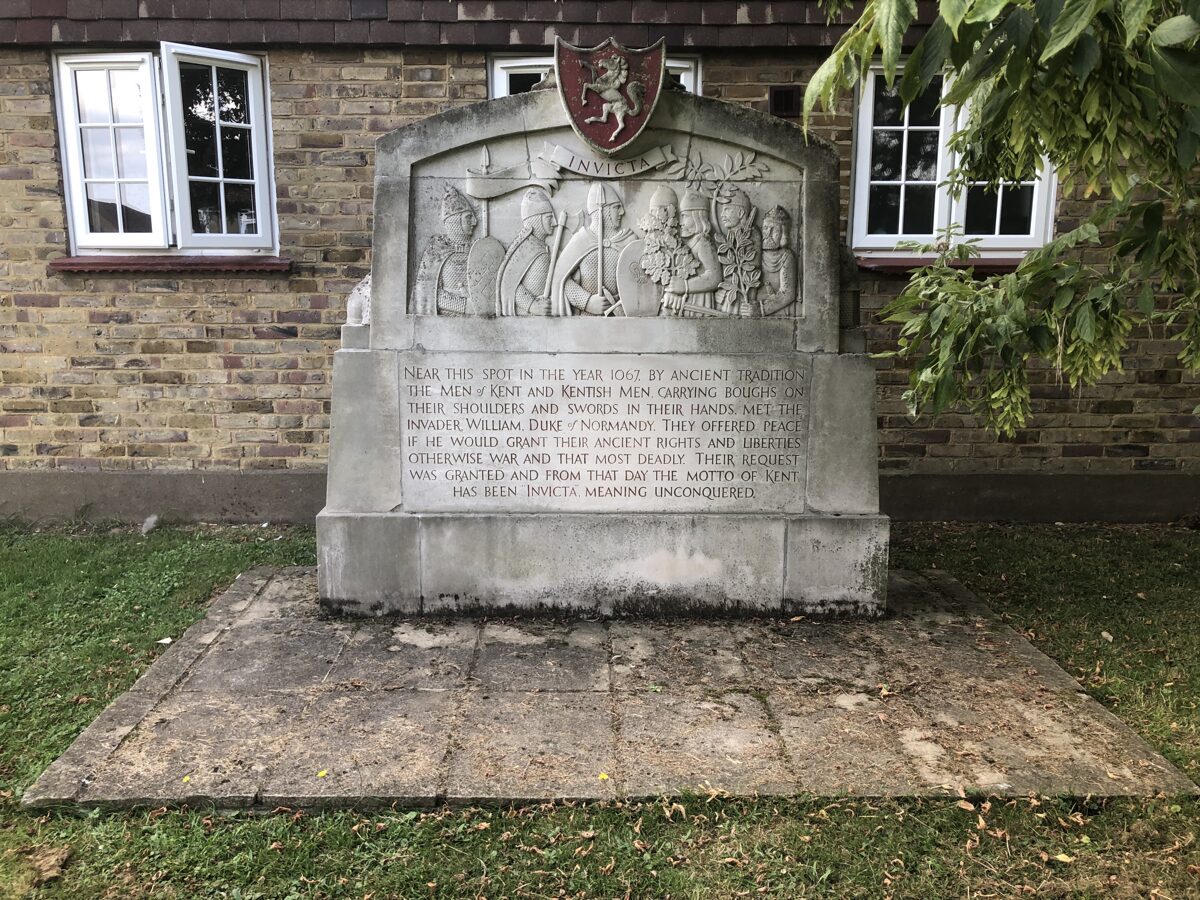
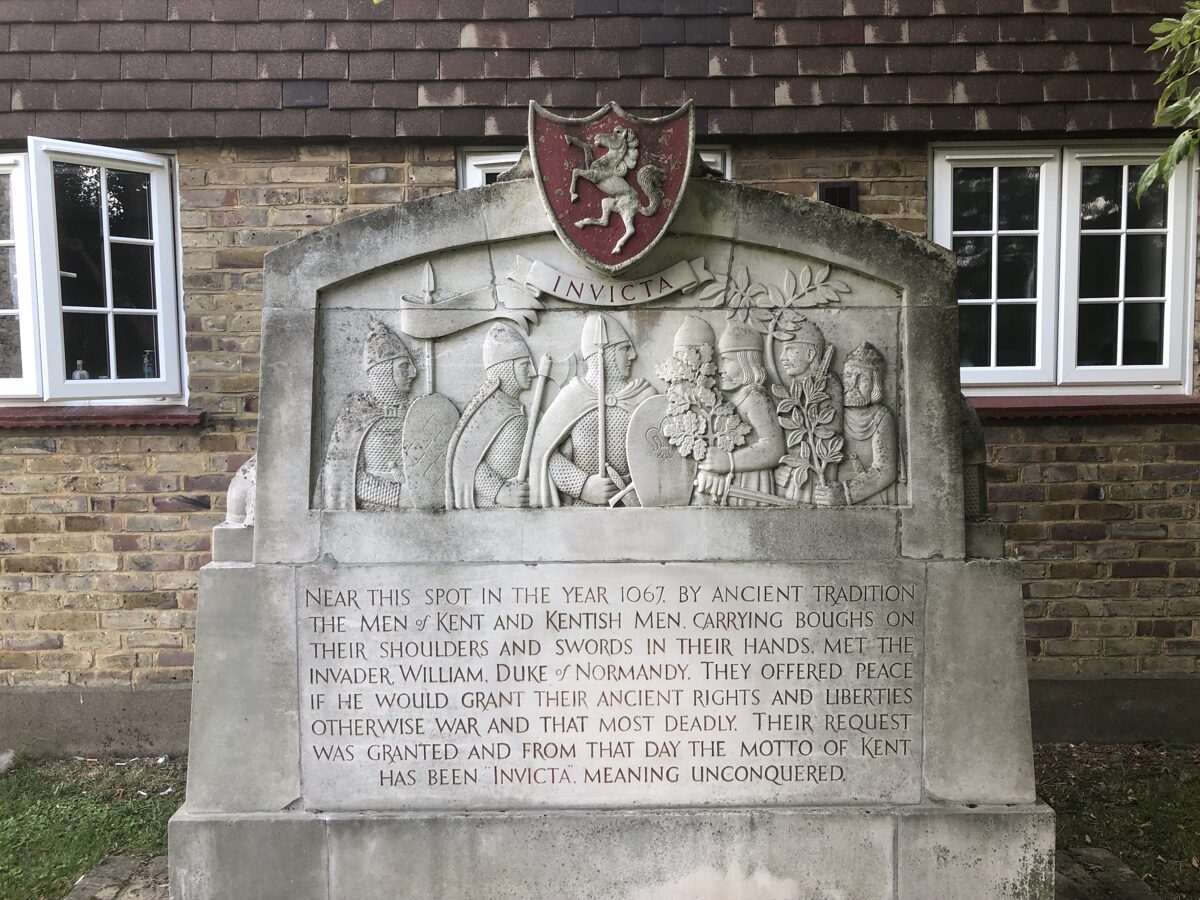
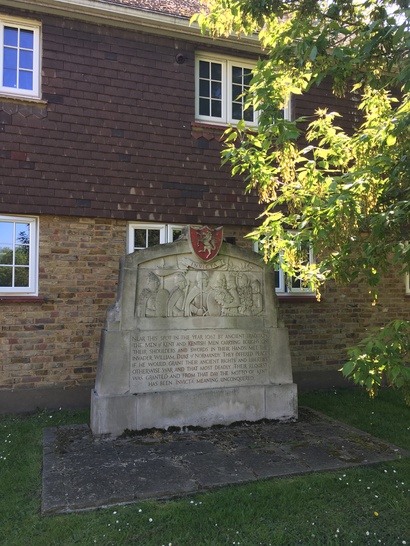 Kent’s lasting legacy, however, extends beyond its landscape and architecture. The Invicta Stone, located in the churchyard of St Peter and St Paul’s Church in Swanscombe, Dartford, Kent, commemorates an essential moment in 1066 when the men of Kent met William the Conqueror. This encounter, though not a battle, stands as a symbol of proud resistance and regional autonomy. According to tradition, the men of Kent, carrying boughs of peace and swords for defense, offered William a choice: peace in exchange for their ancient rights and liberties, or war. Their terms were granted, and from that day, the motto "Invicta"—"Unconquered"—became the enduring symbol of Kent.
The inscription on the stone reads:
Near this spot by ancient tradition the men of Kent and Kentish men carrying boughs on their shoulders and swords in their hands met the invader William Duke of Normandy. They offered peace if he would grant their ancient rights and liberties otherwise war and that most deadly. Their request was granted and from that day the motto of Kent has been INVICTA meaning Unconquered.